Direct factory solutions for global enterprises. Leveraging premium materials, structural integrity, and dynamic surface finishes.
Understanding density variations, mechanical coefficients, and architectural processing parameters of Polyvinyl Chloride sheets.
Custom PVC foam boards (expanded polyvinyl chloride sheets) are engineered using specialized chemical foaming agents that introduce a micro-cellular structure throughout the PVC matrix. This cellular layout gives the material its uniquely low density combined with structural strength. Depending on the processing technique, factories categorize these boards into two major mechanical groups: Free Foam PVC and Celuka PVC.
| Performance Metrics | Free Foam PVC Boards | Celuka Co-Extruded PVC | Standard Solid PVC Sheet |
|---|---|---|---|
| Typical Density Range | 0.40 - 0.55 g/cm³ | 0.55 - 0.80 g/cm³ | 1.30 - 1.45 g/cm³ | Surface Hardness (Shore D) | ≥ 35 | ≥ 55 | ≥ 80 |
| Bending Strength (Flexural) | Moderate (Dynamic Signage) | High (Structural Panels) | Very High (Industrial Parts) |
| Direct-to-Print Printability | Excellent (Porosity allows ink keying) | Good (Glossy, needs corona treatment) | Moderate (Prone to static buildup) |
| Weight Reduction vs. Solid PVC | 60% - 70% Weight Saving | 45% - 60% Weight Saving | Baseline Weight |
For custom signage factories and procurement companies, selecting the exact chemical balance is paramount. Premium manufacturers utilize Titanium Dioxide (TiO₂) as a primary UV stabilizer within the PVC formulation. High concentrations of TiO₂ prevent photodegradation, yellowing, and brittleness caused by solar radiation, assuring a stable lifecycle of 5 to 7 years in harsh outdoor applications. Additionally, cell uniformity prevents localized stress cracks when the board is routed by CNC machines or subjected to thermal form processing.
Analyzing macro supply chain structures, infrastructure demands, and the retail visual communication sector.
The global PVC foam board market has expanded beyond basic visual indicators into a specialized substrate category for architecture, display building, and structural signage. Worldwide infrastructure growth, combined with rapid commercial retail modernization, drives the demand for cost-effective, high-yield manufacturing hubs. According to recent industrial data, the core markets are partitioned as follows:
Utilized as moisture-resistant core panels, lightweight ceiling tiles, and concrete formworks. It provides superior insulation properties, decay resistance, and structural dampening.
The rise of quick-service food chains, supermarkets, and fashion retailers demands visual banners that can be easily shipped, installed, and updated without requiring high-load wall anchor structures.
Its lightweight nature and resistance to salt corrosion make PVC foam boards the substrate of choice for labels, route indicator panels, and internal linings in yachts, trains, and subways.
From a supply perspective, global procurement managers rely heavily on OEM/ODM partners in South China, particularly those displaying verified histories of production continuity. Factories capable of manufacturing both PVC components and associated substrates (like ABS dual-color boards and adhesive PET materials) offer significant logistics savings. By consolidating the supply chain, companies reduce custom clearing fees and optimize container space configuration.
A 32-year legacy of engineering precision, rigorous quality control, and regulatory compliance.
We configure PVC density, thickness, and dimension specifications to align with specific load capacities and wind load ratings required by our clients' engineering teams.
Our facilities are equipped with automated co-extrusion production lines, high-precision flatbed UV printers, computerized CNC routers, and die-cutting machines for high-tolerance specifications.
From initial inspection of incoming PVC resin beads to spectrophotometric analysis of printed surface graphics, our quality department tests every batch to guarantee consistency.
Detailed product directories covering adhesive solutions, rigid cards, engineering boards, and documentation materials.
Aligning manufacturing output with global ecological standards and structural building regulations.
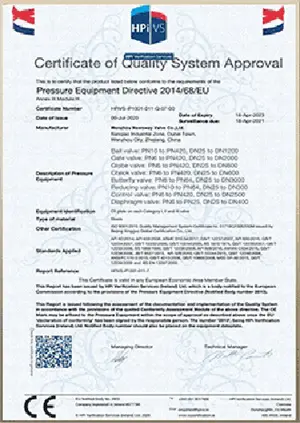
Modern commercial sign materials must conform to strict environmental requirements to be cleared for public installations. For example, building regulations in the EU and North America strictly prohibit the use of lead stabilizers, which were common in traditional PVC production. As a forward-thinking factory, we ensure that our entire polymer output matches the demands of modern chemical declarations:
All finished PVC foam sheets and ABS substrates are verified free of toxic heavy metals, phthalates, and flame retardants like PBB/PBDE. This ensures safe placement in closed spaces, such as classrooms and hospitals.
Our custom formulation yields self-extinguishing sheets that possess a fire rating classification of UL 94 V-0. The material does not support continuous burning once the combustion source is removed.
From chemical blending to structural dimensional profiling, every stage is monitored. This process minimizes variances, helping to ensure the raw materials match client specifications.
Analyzing emerging trends in polymer chemistry, bio-composites, and direct digital integration.
As the visual communication industry shifts toward smarter and more sustainable technologies, custom PVC sign manufacturing is undergoing a structural transition. Our engineering department outlines three key innovations that will define the market in the coming years:
To reduce dependence on fossil fuel feedstocks, research is shifting toward incorporating bio-based plasticizers and plant-derived polymer raw materials. Our goal is to achieve up to 30% recycled content within our co-extruded structural cores without compromising structural integrity.
Traditional processes rely on applying printed adhesive vinyl labels onto the board. We are transitioning toward high-speed flatbed printers that use UV-cured inks directly on the PVC substrate. This method yields outdoor durability and eliminates the risk of graphic peeling.
By embedding passive NFC (Near Field Communication) microchips within the cellular core during the routing phase, manufacturers can create sign systems that communicate directly with nearby smartphones, bridging physical signs with digital spaces.
Deep-dive technical answers detailing processing, longevity, and structural properties.
Free foam PVC sheets expand uniformly from the die head, creating a matte, consistent surface texture from the core to the outer edge. This structural balance makes them easy to cut, route, and shape. In contrast, the Celuka co-extrusion process rapidly cools the outer layer under high pressure. This forms a high-density, smooth outer shell, making the boards ideal for structural signage, construction cladding, and heavy-duty load-bearing panels.
Standard PVC will degrade when exposed to continuous ultraviolet (UV) radiation, leading to fading, chalking, and brittleness. To prevent this, we enrich our outdoor-grade boards with UV stabilizers (such as high-purity Titanium Dioxide) and light absorbers. These additives absorb UV energy and release it as heat, preserving the structural strength and surface color of the signboard for 5 to 7 years in typical outdoor settings.
CNC routing is the industry standard and recommended method for profiling PVC foam boards. When PVC is cut using a CO2 laser, the heat vaporizes the material, releasing chlorine gas. This gas forms corrosive hydrochloric acid, which can damage mechanical equipment and present health risks if not properly ventilated. Mechanical CNC routing, however, produces clean, smooth, non-charred edges without chemical emissions.
With a density of 0.45g/cm³ to 0.55g/cm³, expanded PVC foam boards weigh about half as much as solid PVC and aluminum composite panels (ACP). This reduction in weight lowers fuel consumption and shipping costs, simplifies physical handling on-site, and allows installers to use simple adhesive or structural mountings without complex structural supports.
Yes, our screen and flatbed digital printing lines utilize UV-curable inks that are low in VOCs (Volatile Organic Compounds) and free of heavy metals. These print systems comply with REACH and RoHS standards, allowing our signs to meet indoor air quality certifications for schools, retail environments, and medical facilities.
Expanded PVC has a thermal expansion coefficient of approximately 0.06 - 0.08 mm/m/°C. We design our installations to accommodate this thermal movement, ensuring structural stability between -10°C and +60°C. For extreme climates, we recommend using mounting brackets with slotted holes, allowing the sign panels to expand and contract smoothly without warping.
Discover additional branding products, high-temperature labels, and packaging options designed for industrial supply chains.