
Choosing the best No Parking Signs for a business in 2026 requires more than picking the brightest red panel. Signs must be visible, understandable, durable, and appropriate for the property’s traffic pattern. The Federal Highway Administration’s Manual on Uniform Traffic Control Devices, 11th Edition, stresses consistent wording, placement, and visual recognition for regulatory signs. That guidance offers a reliable starting point, even when a private lot has different operating needs.
Parking confusion has a measurable cost. INRIX’s 2024 Global Traffic Scorecard reported that drivers in the United States lost about 43 hours in congestion, costing roughly $771 per driver. Clear curbside communication cannot solve congestion alone. It can reduce avoidable circulation around entrances, loading zones, fire lanes, and customer pickup areas. Small details matter. A driver approaching at dusk should read the restriction before reaching the painted curb. A delivery worker should understand where a van may wait without blocking access.
This guide compares sign materials, letter sizes, reflective finishes, mounting heights, and message formats for different business settings. It also considers recommendations from the International Parking & Mobility Institute and applicable accessibility standards. Local authorities may control wording, colors, placement, or enforcement. Verify those requirements before installation. A premium sign can still fail if trees hide it, glare washes out the text, or several messages compete on one face. That weakness deserves honest attention. The best solution is practical, legible, and maintained after installation—not merely attractive on opening day.
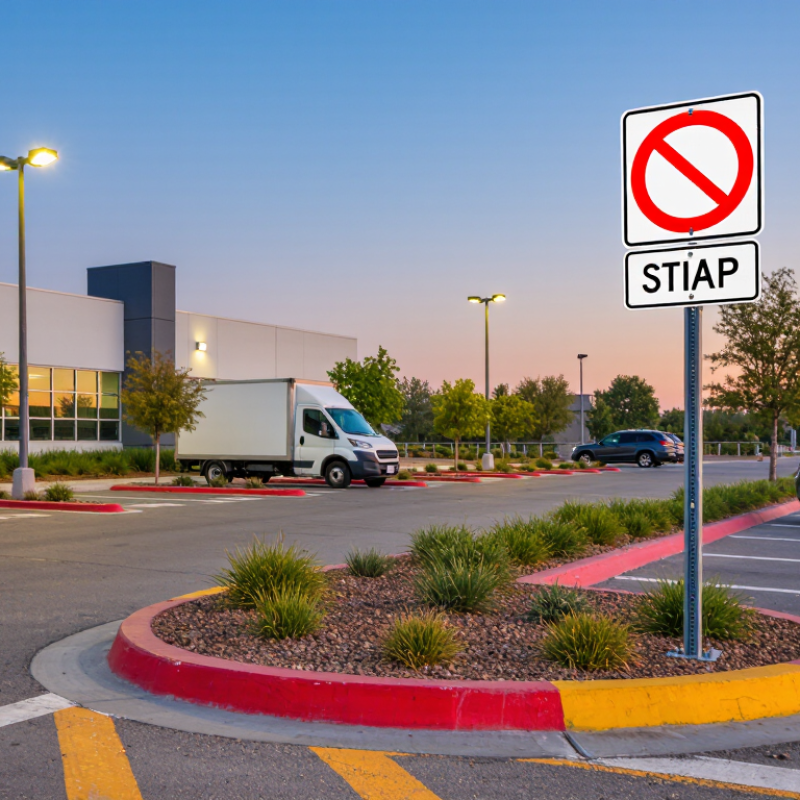
For a business, a no parking sign does more than mark pavement. It tells drivers where space must stay open for deliveries, customer pickup, accessible routes, or emergency access. A clear sign can reduce blocked doors and awkward conversations. That matters. Place it where drivers can see it before stopping, not behind a planter or above eye level.
Effective signs use concise wording, strong contrast, and materials suited to outdoor conditions. Choose lettering that drivers can read while moving slowly. Place signs near entrances, loading areas, and turns into restricted spaces. Keep wording consistent across the property. If one sign says “No Parking” and another gives a time window, drivers may not know which instruction applies. Check visibility after dark and during rain. A faded sign is easy to miss.
Signs work best alongside thoughtful site planning. Mark the boundary clearly, leave delivery vans room to maneuver, and avoid posts that block sightlines. Review the layout when business hours or traffic patterns change. Some drivers may still stop in the wrong place; signs are not a perfect fix. It happens. Keep notes on recurring trouble spots and adjust sign placement when needed. Before installation, check that the wording and location fit local rules and property requirements.
| Business need | Suitable no-parking sign | What it helps do | Practical selection guidance | Important consideration |
|---|---|---|---|---|
| Keeping customer entrances clear | “No Parking — Keep Entrance Clear” | Discourages vehicles from blocking doors, pedestrian access, and sightlines near the entrance. | Use concise wording, strong contrast, and a position visible before drivers reach the entrance. | Place signs on the property where drivers can see them without obstructing walkways or views. |
| Protecting delivery and service access | “No Parking — Loading Zone” with applicable hours | Helps keep designated loading areas available for deliveries and service vehicles. | State permitted times or vehicle restrictions clearly when they apply; use matching pavement markings where appropriate. | Confirm local rules for curb use, loading zones, and any time limits. |
| Keeping fire access routes unobstructed | Fire-lane or fire-access signs approved for the site | Communicates that vehicles must not block designated emergency access areas. | Use the wording, placement, and markings required by the local fire authority or applicable code. | Fire-lane designation and enforcement requirements vary by jurisdiction; obtain the required approval. |
| Reducing unauthorized use of private parking areas | “Private Property — No Unauthorized Parking” | Sets expectations for customers, employees, tenants, and visitors using a private lot. | Add clear rules for reserved spaces, visitor parking, or towing only when those rules are lawful and properly disclosed. | A private-property sign does not automatically grant authority to impose public-road traffic restrictions or tow vehicles. |
| Making restrictions easier to see at night | Reflective no-parking sign suitable for the location | Improves visibility when headlights illuminate the sign in low-light conditions. | Choose durable, weather-resistant construction and reflective material appropriate to the viewing distance and lighting. | Reflective material improves visibility but does not replace required lighting, placement, or local sign specifications. |
| Managing a temporary restriction | Temporary “No Parking” sign with dates or hours | Alerts drivers to short-term access needs such as maintenance, moving, or construction. | Include the restriction period and contact or project information when useful; remove the sign when it is no longer applicable. | Temporary restrictions on public streets may require permits, advance notice, or authorized installation. |
| Choosing a durable sign for outdoor use | Weather-resistant metal or rigid plastic sign | Helps maintain legibility through ordinary outdoor exposure when properly installed and maintained. | Select a substrate and mounting method suited to local weather, installation surface, and expected service conditions. | Inspect periodically for fading, damage, loose fasteners, and vegetation or parked vehicles that block the sign. |
Sign rules, approved wording, dimensions, placement, and enforcement authority vary by location. Check local parking, accessibility, fire-safety, and property requirements before installation.
It helps keep delivery areas, customer pickup spaces, accessible routes, and emergency access clear. It can also prevent blocked doors and awkward conversations.
Put them where drivers can see them before stopping, especially near entrances, loading areas, and turns. Keep signs clear of planters and branches.
Use concise, consistent wording and strong contrast. Conflicting instructions may confuse drivers. Simple is better.
Choose lettering drivers can read while moving slowly. Select materials suited to local weather, and check visibility at night and in rain.
Yes. Requirements may vary for public streets, private lots, and shared driveways. Ask the relevant local department and check property or lease restrictions.
Mark restricted boundaries clearly and leave delivery vans room to maneuver. Avoid posts that block pedestrian paths or sightlines.
Check regularly for faded lettering, loose posts, branches, and parked vehicles blocking the message. Inspect again after storms or landscaping work.
The sign may be unclear or poorly placed, though signs are not a perfect fix. Note recurring locations, take a photo, and verify requirements before making changes.
In 2026, well-chosen No Parking Signs can help businesses keep entrances, loading areas, and emergency access routes clear while reducing confusion for customers and staff. The best sign depends on the space and its purpose: businesses may need signs for reserved areas, delivery zones, fire lanes, or temporary restrictions. Clear, concise wording helps people understand what is expected at a glance.
When choosing signs, consider durable materials suited to local weather, lettering that is easy to read, and colors with strong contrast. Place signs where drivers and pedestrians can see them before reaching the restricted area, without blocking pathways or creating hazards. Check local requirements for sign wording, placement, and size, and inspect signs regularly for fading, damage, or obstruction. Keeping signs visible and up to date helps maintain safe access and makes parking expectations easier to follow.
