
Choosing the right Fire Exit Sign is not a simple matter of selecting the brightest green panel. Global buyers must consider visibility, power supply, installation height, viewing distance, and evacuation behavior. A sign may look impressive in a showroom, yet disappear inside smoke, glare, or a crowded corridor.
Fire safety researcher Dr. Guylène Proulx has emphasized, “Occupants do not always behave rationally during fires.” This reminder matters. People may follow a familiar route, ignore an unfamiliar symbol, or hesitate beside a poorly positioned door. The best sign supports quick recognition under pressure. It should remain visible from key decision points, including stairwells, corridor turns, ramps, and final exit doors.
This guide examines illuminated, photoluminescent, edge-lit, suspended, and directional Fire Exit Sign types for international purchasing teams. It compares performance, maintenance needs, installation conditions, and practical limitations. Standards such as ISO 7010 and ISO 3864 can provide useful reference points, but local building and fire requirements still need confirmation before ordering. One design cannot fit every market.
Details matter. A battery-backed sign needs routine testing. A photoluminescent sign needs reliable ambient charging light. An outdoor exit requires suitable weather protection. These points are easy to overlook.
No category is perfect. Product labels can also be vague. Buyers should request test records, photometric information, material details, warranty terms, and installation guidance. That extra step may feel slow, but it reduces costly mistakes. This 2026 overview helps global buyers compare realistic options, question supplier claims, and choose exit signage that people can recognize when conditions become confusing.
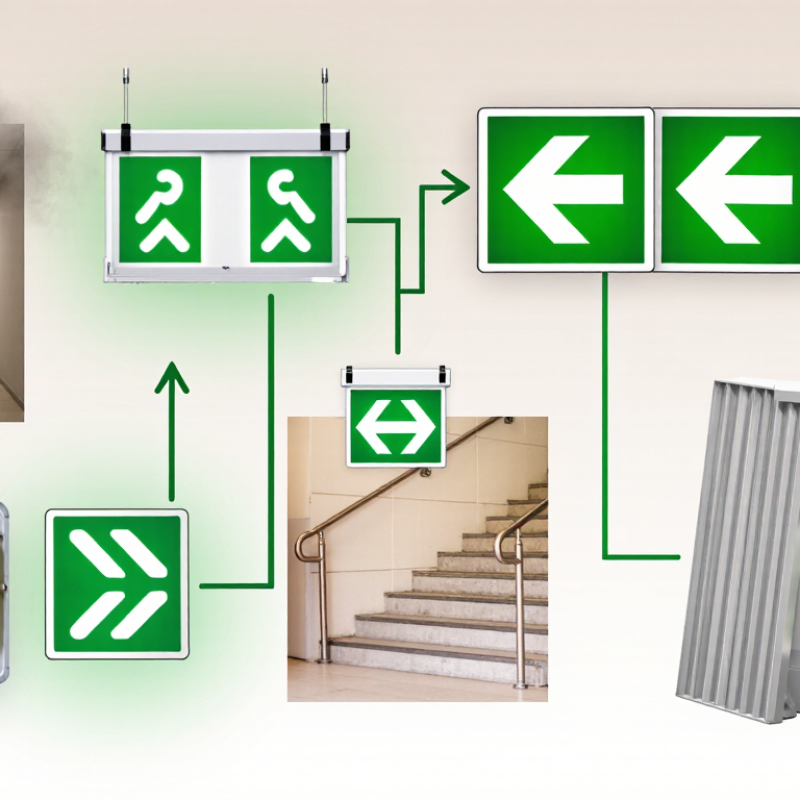
Fire exit signs are visual safety tools that guide people toward a safe escape route during smoke, darkness, or power failure. They usually combine a running-person symbol, directional arrow, and clear “EXIT” wording. In 2026, buyers increasingly choose photoluminescent, internally illuminated, or emergency-powered signs. The right option depends on building layout, viewing distance, ambient light, and maintenance conditions.
Small details matter.
NFPA’s Fire Loss in the United States During 2023 reported 1,504,500 fires, 3,670 civilian deaths, and 13,250 civilian injuries. Exit signs cannot prevent every tragedy, but visible route information can reduce hesitation in stressful conditions. ISO 7010 supports internationally recognizable safety symbols, while NFPA 101 and regional building codes address placement, visibility, and emergency operation. Buyers should verify the adopted requirements locally, not rely on a supplier’s general claim.
A practical sign should remain visible from normal approach angles.
Its arrow must match the actual route, not an assumed one.
Battery backup needs scheduled testing.
Photoluminescent products require adequate charging light and clean surfaces. Poor installation can undermine an excellent sign.
That is easy to overlook.
Field inspections often reveal blocked sightlines, faded graphics, or arrows pointing toward locked doors. These failures are not dramatic, but they are dangerous. Product selection should include documented test results, service instructions, viewing-distance data, and replacement support. Even experienced teams can miss changing partitions or temporary storage. A second site walk is sometimes worth more than a cheaper purchase.
For international buyers, fire exit signs usually fall into several practical types. Photoluminescent signs absorb ambient light and glow during power loss. They need suitable lighting and regular cleaning. Internally illuminated signs use LEDs or another built-in light source. They remain highly visible in dark corridors and smoky conditions. Externally illuminated signs depend on separate emergency lighting. Their performance can change when lamps are blocked or poorly positioned.
Maintained signs stay lit during normal operation and emergencies. They suit public buildings, airports, hotels, and busy retail spaces. Non-maintained signs activate only when normal power fails. They can reduce energy use in quieter areas. Some buyers choose combination signs with directional arrows, emergency lights, and exit symbols. These units can save wall space, but servicing becomes less simple. Keep that trade-off visible.
Pictogram signs communicate across language barriers. Text-based signs may still help in markets that require local wording. Ceiling-hung, wall-mounted, and projecting signs serve different viewing angles. A narrow corridor may need a projecting sign, not a flat wall panel. Check viewing distance, battery duration, mounting height, and environmental conditions before ordering. Local building codes and recognized safety standards must guide the final selection. Requirements vary between countries, and product descriptions can hide important differences. I have seen buyers focus on brightness while overlooking arrow direction. That mistake can confuse people during evacuation. No single type wins everywhere.
For global buyers, the best fire exit sign is not simply the brightest model. It must match local codes, building use, viewing distance, and emergency power conditions. NFPA’s Fire Loss in the United States During 2021 reported 1,353,500 fires and approximately $15.9 billion in direct property damage. Clear evacuation guidance remains essential.
In the United States, NFPA 101 generally requires visible exit markings, dependable illumination, and emergency operation where normal power fails. Accepted sign construction can vary by the adopted edition and local authority.
In Europe, ISO 7010 governs safety sign symbols, while ISO 3864 addresses color, shape, and layout. EN 1838 commonly requires at least 1 lux along escape routes and rapid emergency-lighting activation. Requirements differ by building category.
The United Kingdom commonly references BS 5266-1 for emergency lighting design. Australia and New Zealand use AS/NZS 2293.1 for emergency escape lighting and exit signs. Germany may apply ASR A1.3 alongside building-specific rules. Internally illuminated signs suit smoky corridors and large venues. Photoluminescent signs reduce wiring needs, but they depend on sufficient charging light. That limitation is often underestimated.
Check mounting height, viewing distance, pictogram direction, battery duration, testing access, and certification documents.
Verify the adopted local edition. A technically compliant sign can still fail if a column hides it.
No sign is perfect. Field inspection should challenge the original design, not merely confirm it.
2026 Best Fire Exit Sign Types for Global Buyers
Choosing a fire exit sign involves more than selecting a bright green panel. During site inspections, I have seen attractive signs become difficult to read under smoke, glare, or weak emergency lighting. Compare photoluminescent, LED, and internally illuminated materials by checking brightness retention, surface durability, and cleaning needs. Aluminum suits demanding industrial areas, while acrylic or PVC may fit lighter indoor applications. Local temperature, humidity, and installation surfaces also matter.
Tips: View the sign from the longest escape-route distance. Check contrast at eye level and from side angles. Ask for test records, battery information, and maintenance instructions. A showroom sample can mislead.
Installation affects performance as much as material. Wall-mounted signs work well in narrow corridors, but ceiling-mounted or suspended signs can improve visibility at junctions. Double-sided designs may guide people approaching from opposite directions. Use screws on rough or dusty surfaces; suitable adhesive can work on smooth, clean walls. Avoid placing signs behind doors, pipes, decorations, or emergency equipment. Requirements differ between countries and building types, so confirm dimensions, symbols, colors, and illumination rules with a qualified local professional. A sign may meet one market’s expectation but fail another’s inspection. That possibility deserves honest attention.
Comparison of common fire exit sign types using a practical 1–5 buyer index. Higher scores indicate stronger performance for the stated purchasing criterion. Local regulations, mounting height, viewing distance, emergency duration, and photometric requirements must be checked before specification.
The comparison reflects typical characteristics of photoluminescent, surface-mounted LED, edge-lit LED, and self-contained LED signs. Photoluminescent signs require suitable ambient charging light, while electrically powered signs require an emergency power source. Evaluation principles are aligned with common guidance found in ISO 7010, ISO 16069, EN 1838, and NFPA 101; exact requirements vary by jurisdiction.
Choosing the right fire exit sign begins with the building, not the product catalog. A warehouse with tall racks needs longer viewing distance and stronger contrast. A hotel corridor may need compact signs with clear directional arrows. Visibility matters. Check the sign from door level, stair landings, and normal walking routes. A sign that looks bright in a showroom may disappear behind smoke, glare, or ceiling fixtures.
Global buyers should compare internally illuminated, photoluminescent, and externally illuminated types. Internally illuminated signs suit areas with regular occupancy and dependable power. Photoluminescent signs can support wayfinding during power loss, but they require suitable ambient light and clean surfaces. Externally illuminated signs may work well in specific layouts, though lamp placement can create shadows.
I have seen project teams choose the cheapest option, then discover poor visibility at the far end of a corridor.
Ask for measurable evidence. Review viewing-distance data, battery duration, ingress protection, material performance, and test records. Confirm the arrow direction on the actual floor plan. Do not rely on a generic image. Local fire authorities and building professionals may require specific colors, symbols, mounting heights, emergency duration, or certification documents. Requirements also vary by occupancy and region. A reliable supplier should provide traceable quality records and clear installation guidance. Still, paperwork is not enough. Test the installed sign during a simulated power failure, inspect it from several angles, and question any result that feels merely acceptable.
It shows the direction toward a safe escape route. Most signs use a running-person symbol, an arrow, and clear “EXIT” wording. It should remain visible during smoke, darkness, or power failure.
They reduce hesitation during stressful evacuations. A visible arrow can guide people through an unfamiliar corridor. They cannot prevent every emergency. That limitation matters.
Common options include internally illuminated, photoluminescent, and externally illuminated signs. Internally illuminated models suit busy areas with dependable power. Photoluminescent signs need charging light and clean surfaces. The building decides.
View the sign from normal walking routes, doorways, and stair landings. Check it from different angles and distances. A showroom test is not enough. Columns, smoke, glare, or ceiling fixtures may hide it.
The arrow must match the actual escape route. Never copy a generic product image without checking the floor plan. An arrow toward a locked door creates dangerous confusion. Small errors matter.
Confirm mounting height, viewing distance, symbol direction, and emergency operation. Inspect nearby partitions, stored materials, and structural columns. Temporary storage can block a previously clear sign. A second site walk is worthwhile.
Test battery backup on a scheduled basis. Simulate a power failure and record the operating time. Check charging, wiring, surfaces, and visible graphics. Testing once is not permanent proof.
Request viewing-distance data, test records, service instructions, and material information. Check battery duration and environmental protection details. Verify local certification and installation requirements with qualified professionals. Paperwork helps, but field testing is better.
In 2026, a Fire Exit Sign remains an essential safety tool for guiding people toward safe evacuation routes during fires, power failures, and other emergencies. For global buyers, choosing the right sign requires understanding the differences between photoluminescent, internally illuminated, externally illuminated, LED, wall-mounted, ceiling-mounted, and suspended designs. Each type offers specific advantages depending on building layout, visibility needs, emergency conditions, and maintenance expectations.
International purchasing decisions should also consider regional safety standards, symbols, language requirements, electrical specifications, and certification documentation. Buyers can compare products by evaluating material durability, brightness, viewing distance, battery performance, environmental resistance, and installation methods. The best choice should provide clear visibility from multiple directions, remain reliable during power interruptions, suit the building’s structure, and support efficient installation and long-term maintenance. By balancing compliance, performance, usability, and total ownership costs, global buyers can select a Fire Exit Sign type that improves emergency wayfinding across offices, factories, hotels, public buildings, and commercial facilities.
